
The quick answer
Every UK business website needs to be mobile-first, fast, make it easy to get in touch, be built on local SEO foundations and show clear trust signals. Get these five right and your website will work as hard as you do.
A good-looking website is only the start. The sites that actually bring in work share a handful of features that help customers find them, trust them and take the next step. Here’s what to look for — whether you’re building your first website or replacing an old one.
Mobile-first, responsive design
Most people browsing for a local business are doing it on their phone, often on the move. Google also uses the mobile version of your site to decide how it ranks, which it calls mobile-first indexing. A mobile-first website is designed for small screens from the start, then scaled up — not squeezed down as an afterthought.
- Text that’s readable without zooming, and buttons big enough to tap.
- Menus, forms and galleries that are just as easy to use on a phone as on a laptop.
Fast loading speed
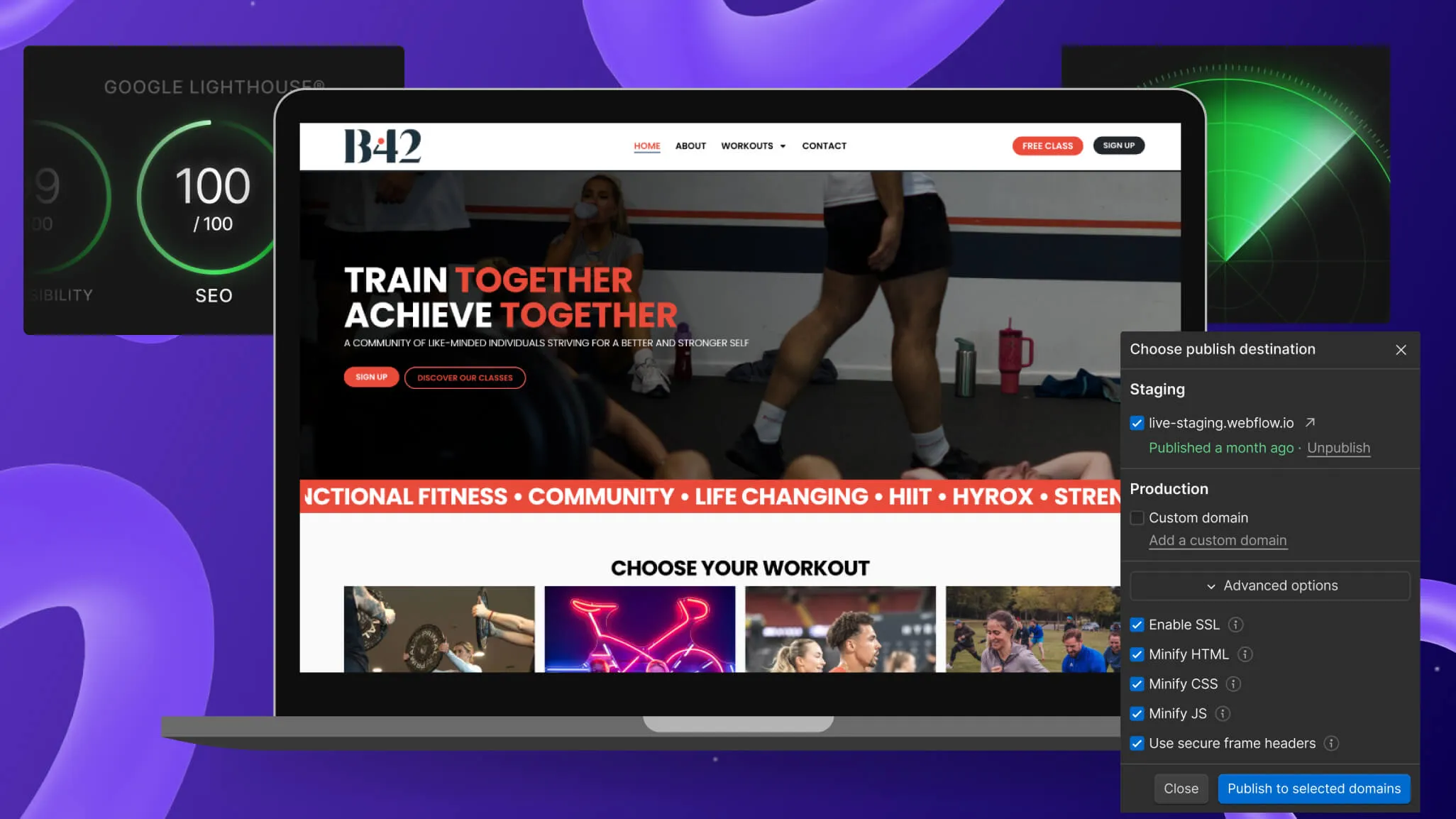
Visitors are impatient. If your pages take too long to appear, many will give up and go back to the search results — straight to a competitor. Speed is also part of how Google measures page experience, through its Core Web Vitals.
- Optimised, modern image formats that look sharp without slowing pages down.
- Lean, hand-built code and reliable hosting, rather than bloated themes and plugins.
Clear calls to action and easy contact
Every page should make the next step obvious. Whether that’s calling you, sending a message or booking a quote, visitors shouldn’t have to hunt for how to get in touch.
- A WhatsApp button — many customers would rather message than call.
- A short, simple enquiry form that asks only for what you really need.
- Buttons with clear wording like “Get a free quote” repeated through the page.
Local SEO foundations
A website nobody can find won’t bring in work. Building SEO in from day one is far easier (and cheaper) than fixing it later. For local businesses, that means making it crystal clear to Google what you do and where you do it.
- Dedicated pages for your main services and the areas you cover.
- Unique page titles, meta descriptions and structured data for every page.
- A website linked to your Google Business Profile, with matching contact details.
Trust signals
People buy from businesses they trust. Your website should answer the silent question every visitor has: “Are these people any good, and are they legitimate?”
- Genuine reviews and testimonials, ideally with names and photos.
- Examples of your work, case studies and real photos of you and your team.
- A secure (HTTPS) site with a privacy policy. If you collect enquiries, the ICO’s UK GDPR guidance explains what you need to tell people.
Bonus features worth adding
The five features above are the essentials. Once they’re in place, these extras can make a good business website even better, depending on how your customers like to buy:
Online booking
Let customers book a call, a table or an appointment without picking up the phone. Fewer back-and-forth messages, more confirmed jobs.
Analytics
Google Analytics or a privacy-friendly alternative shows how many people visit, where they come from and which pages bring in enquiries.
A blog or advice section
Useful articles answer the questions customers already search for, which helps you rank for more of them.
Accessibility
Good contrast, readable text and buttons that work with a keyboard make your site easier for everyone to use.
You don’t need all of them on day one. Start with the features that remove friction for your customers, then add more as your business grows.
Common mistakes that cost UK businesses customers
These are the problems we see most often when we look at small business websites. Most are quick to fix once you know they’re there:
- Hiding the phone number. If it isn’t visible on a phone without scrolling, many visitors simply won’t look for it.
- Giant, uncompressed images. Photos straight off a camera can be several megabytes each, which slows every page down.
- One page for everything. A single “Services” page rarely ranks for each service. Give your main services their own pages.
- No reviews in sight. Glowing Google reviews do little good if visitors never see them on your website.
- Forgetting the basics after launch. Out-of-date prices, old opening hours and broken links quietly chip away at trust.
None of these need a complete rebuild. But together, they can be the difference between a website that quietly costs you customers and one that wins them. For the bigger picture, our guide to small business websites explains how a website helps you get found locally.
How to check your current website in 10 minutes
Already have a website? You don’t need any technical knowledge to see how it measures up. Grab your phone and try this quick test:
- Open your homepage on your phone. Can you tell what you do, and where, without scrolling or zooming?
- Try to contact yourself. How many taps does it take to call, message or send an enquiry? More than two is too many.
- Time how long it takes to load on mobile data, not Wi-Fi. If you’re counting past three, so are your customers.
- Search Google for your main service and your town. Does your website appear? Does your Google Business Profile link to it?
- Look for proof. Can a new visitor see reviews, photos of real work or examples of past projects within a few seconds?
If any of these made you wince, you’re not alone. Most of the problems they uncover are fixable without starting again from scratch.
These checks also matter for local SEO. Google wants to send searchers to pages that load quickly, work well on a phone and clearly answer their question. A website that passes all five gives you a much better chance of appearing when nearby customers search for what you do.
Want a second opinion? Request a free website audit and we’ll run through these checks and more, by hand, then send you a clear list of what to fix first.
Which feature should you fix first?
If your current website is missing several of these features, start with whatever stops people getting in touch. A slow, beautiful site still loses visitors, but a site with a hidden phone number loses the ones who were ready to buy.
In practice, that usually means this order: make contact details obvious, make the site work properly on a phone, speed it up, add trust signals, then build out your local SEO. The first two are often quick wins that can be fixed in days, not weeks.
SEO comes last in the list, but not because it matters least. It simply takes longer to pay off, and it works far better once the rest of the site is ready to turn visitors into customers. There’s little point ranking first on Google if the page you rank with doesn’t convert.
If you’re planning a brand-new website, you don’t need to choose. Build all five in from the start and you’ll avoid paying to fix them later.
Whatever you fix first, measure the difference. Note how many calls, messages and enquiries you get each month before and after a change. Small improvements to how easy it is to get in touch often show up in your inbox within weeks, and they tell you exactly where to focus next. Over time, those small wins add up to a website that works as hard as you do.
Your new website launch checklist
Before your new website goes live, check it against this list:
- Looks and works perfectly on a phone
- Loads in a couple of seconds, even on mobile data
- Phone, WhatsApp and contact form easy to find on every page
- Clear page titles and descriptions for each service and area
- Linked to an up-to-date Google Business Profile
- Reviews, examples of work and real photos of your team
- Secure (HTTPS) with a privacy policy that covers your contact form
Already have a website and not sure how it measures up? Get a free website audit and we’ll send you a clear report on what’s working and what’s holding it back.
What does a website with these features cost?
Less than you might think. Every website we build at Design Wiz includes all five features as standard, from £159 for a one-page site, or £199/month with ongoing SEO, updates and hosting included.
See how we design and develop websites, or compare your options in our UK website cost guide.
