
What is SEO website design?
Web design SEO, or SEO website design, means designing and building a website so search engines can understand it and rank it. It’s not a plugin you add at the end. It’s the structure, speed and words baked into the site from the start.
A beautiful website nobody can find is a very expensive secret. Good web SEO design makes sure the right people actually see it.
Think of it like opening a shop. Design is the shop itself: the window, the layout, the friendly welcome. SEO is making sure it’s on a street people walk down, with a sign they can read from the corner.
You need both. A gorgeous shop down an alley gets no customers. A shop on the high street with the shutters down doesn’t do much better.
Does web design affect SEO?
Yes, a lot. Google can’t admire your colour palette, but it can tell whether your site is fast, easy to use on a phone and clearly organised. Those are all design decisions.
How it works on a phone
Google ranks your site based on its mobile version. If it’s fiddly on a phone, it’s fiddly for Google.
How fast it loads
Heavy images and bloated code slow pages down. Slow pages lose visitors, and Google notices.
How it’s organised
Clear pages, menus and links help Google understand what you do and which page answers which search.
What the words say
Headings, page titles and real, readable text tell Google what each page is about. Pretty pictures of words don’t.
Google’s own SEO starter guide says much the same thing: make your site easy for people to use and easy for Google to understand, and the rest gets easier.
The SEO web design checklist
This is the SEO-friendly web design checklist we work through on every site we build. Most of it happens before a single pixel is coloured in.
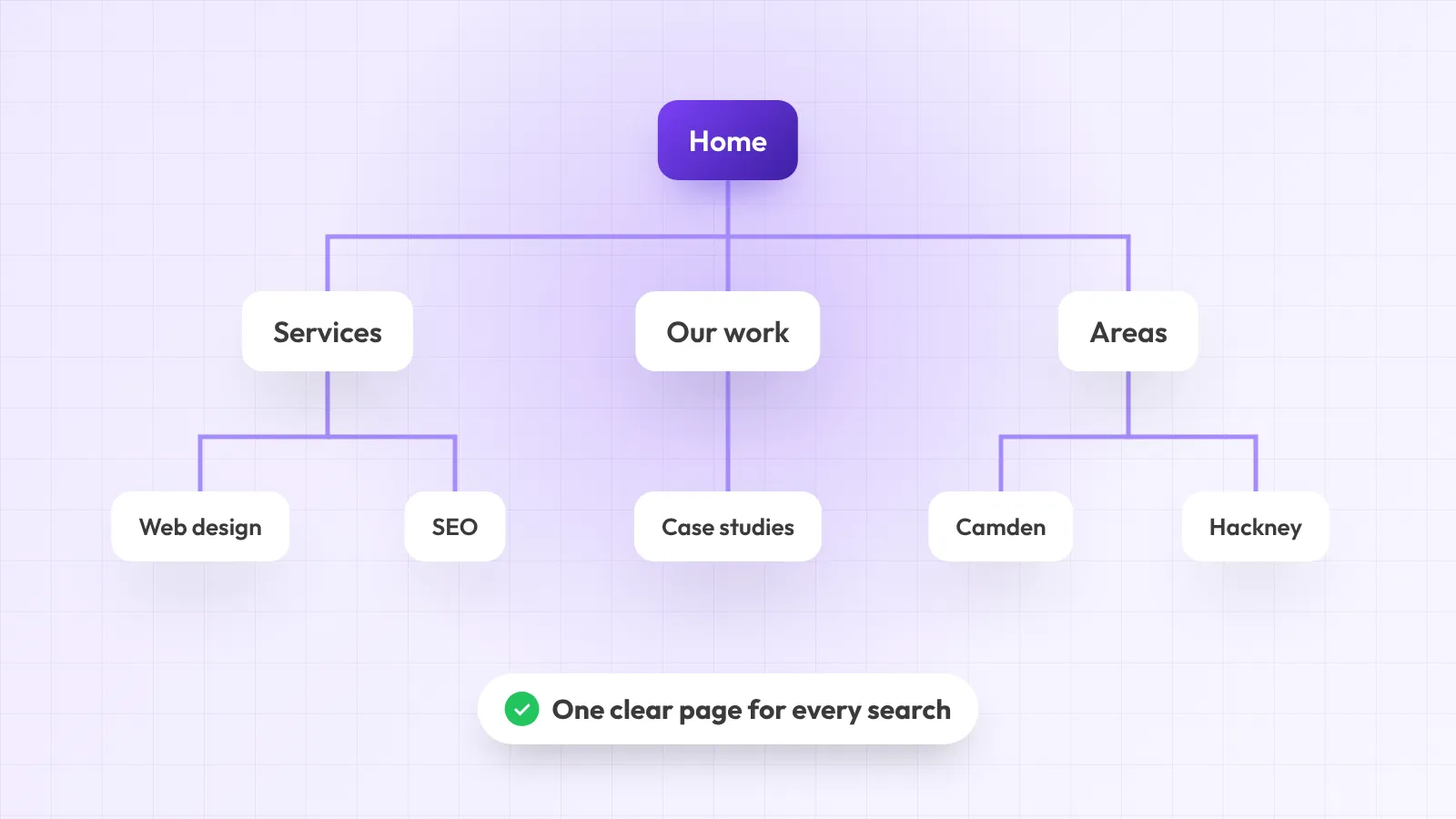
Plan one page for every search
Work out what your customers type into Google, then give each main service and area its own page. A page about “boiler repairs in Hackney” can rank for that. A page about “everything we do, everywhere” rarely ranks for anything.
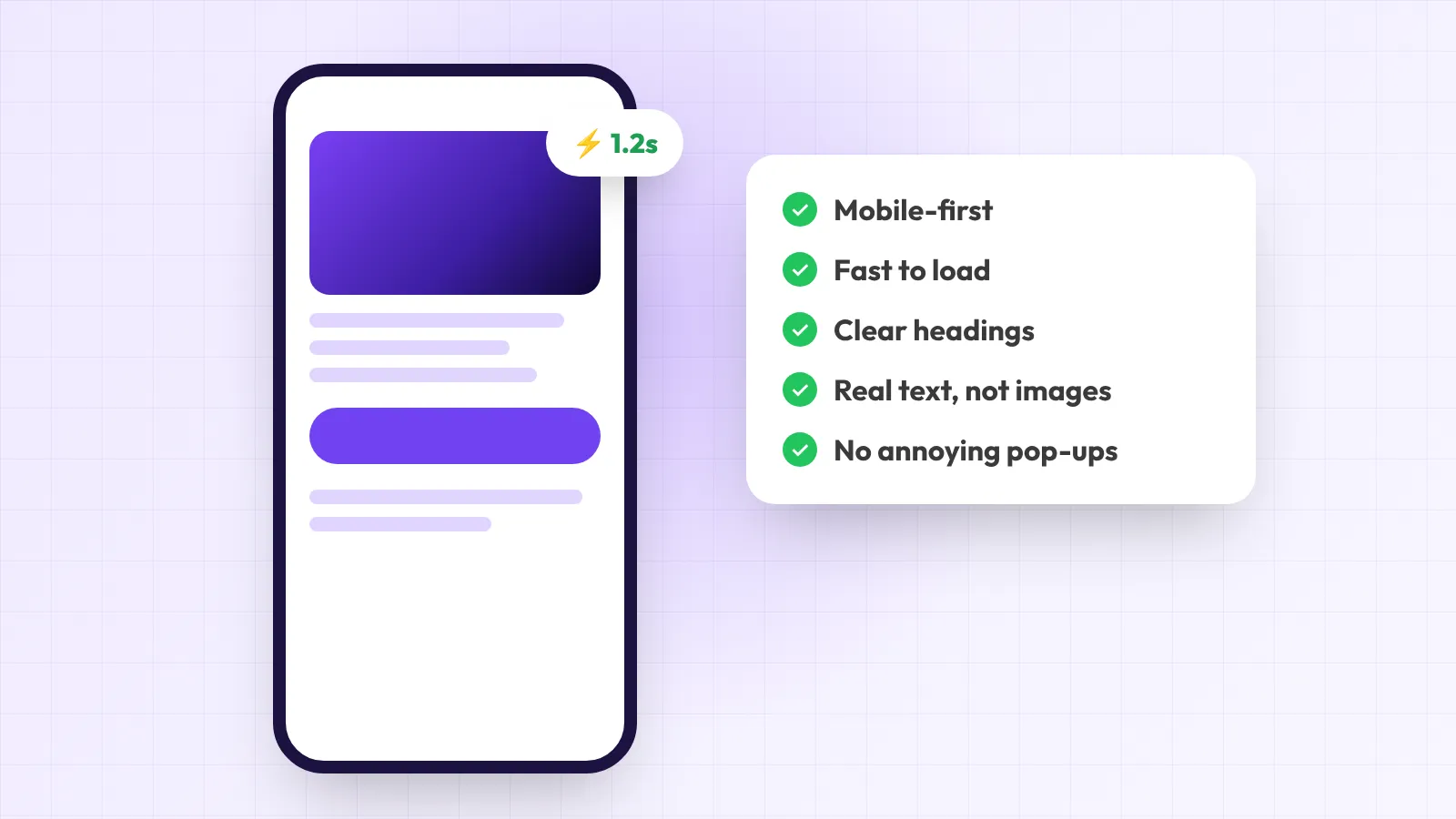
Design mobile-first
Google looks at the mobile version of your site to decide where it ranks. So we design for the phone first, then scale up to the desktop, not the other way round.
Keep it fast
Compressed images, lean code and good hosting. Google measures speed with Core Web Vitals, a set of scores for loading, responsiveness and how much the page jumps about while it loads.
Get the words and headings right
One main heading per page that says what it’s about, sensible subheadings, and a page title and description written for search results. Use real text, not text baked into images.
Link pages together
Clear menus, breadcrumbs and links in the copy help visitors and Google find your most important pages. Every page should be a click or two from the homepage.
Add structured data
Structured data is hidden code that tells Google the facts: your business name, services, reviews and FAQs. It doesn’t guarantee anything, but it removes the guesswork.
We practise what we preach. This website has its own page for each service, area and case study, with structured data and breadcrumbs on every one. If you’re curious how design and build fit together, our guide to website design and development walks through the whole process.
Web design mistakes that hurt SEO
Plenty of SEO problems aren’t caused by a lack of SEO at all. They’re baked in by the design. The usual suspects:
- Putting important text inside images, where Google can’t read it.
- Cramming every service onto one page, so no page is about anything in particular.
- Giant, uncompressed photos that take an age to load on 4G.
- Pop-ups that cover the whole screen the moment someone arrives.
- Changing page addresses in a redesign without redirects, and losing years of rankings overnight.
- Every page called “Home”, or titles that don’t mention what you do or where.
That pop-up one is worth a special mention. Google says full-screen pop-ups that block content can make a page harder to use, which can affect how it ranks. Its guide to avoiding intrusive interstitials covers what’s fine and what isn’t.
How to check your own website’s SEO in five minutes
You don’t need fancy tools to spot the big problems. Grab your phone and a cup of tea, and try these:
- Search for what you do and where. Try “electrician Camden”, not your business name. Customers who already know your name will find you anyway.
- Open your site on your phone. Does it load quickly? Can you read it without pinching and zooming? Is the phone number one tap away?
- Look at the browser tab. The text there is your page title. If it just says “Home”, Google has very little to go on.
- Count your service pages. If everything you do lives on one page, each service is competing for attention instead of ranking on its own.
If two or more of those made you wince, the good news is that they’re all fixable, usually without starting again from scratch.
Web design and SEO near me: the local bit
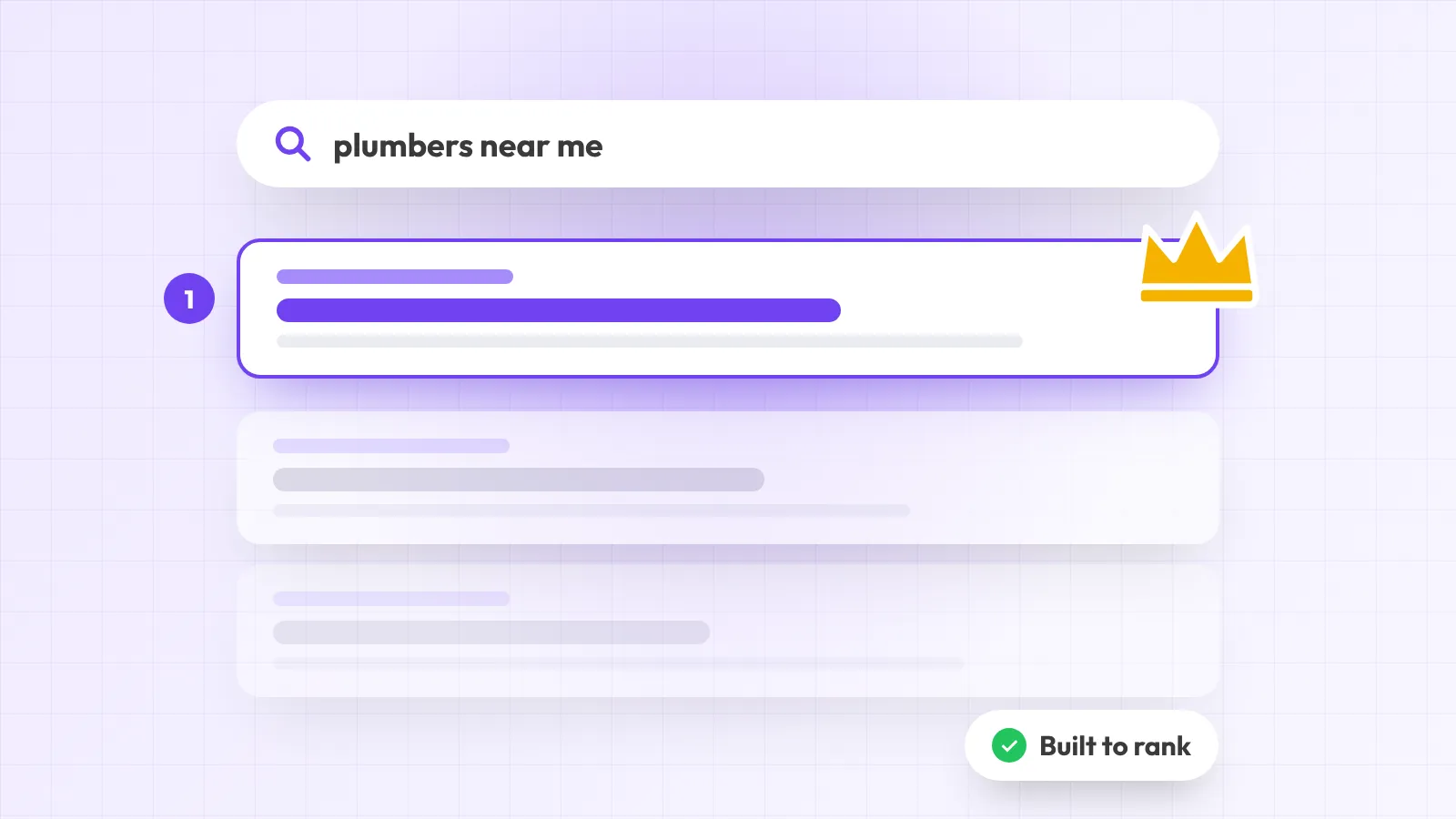
If your customers are local, “near me” searches are where the money is. Someone typing “web design and SEO near me”, or “plumber near me”, sees a map and a handful of results. You want to be one of them.
Local SEO website design means a page for each area you cover, your business name, phone number and service area shown the same way everywhere, and a well-kept Google Business Profile. We build sites this way for businesses across London and its 32 boroughs.
The website and your Google Business Profile work as a team. The profile gets you into the map. The website convinces people to pick up the phone once they click.
SEO web design services: design once, or keep improving?
There are two halves to SEO web design services, and it helps to know which one you’re buying:
- SEO-ready design and build. The structure, speed, headings, titles and structured data are done properly at launch. This is the foundation, and every website should have it.
- Ongoing SEO. New pages, fresh content, checking Google Search Console, improving what’s working and fixing what isn’t. This is what moves you up over time.
A great foundation with no ongoing work is a bit like a gym membership you never use. You’ve paid for the potential. Our local SEO services cover the ongoing half, and our guide to website management explains what that regular care looks like.
How much does SEO web design cost?
The honest answer is “it depends”, so here are our real numbers. Every Design Wiz website includes SEO foundations as standard, with no “SEO add-on” at checkout.
Bespoke websites start from £159 for one page, £299 for three and £599 for five, plus hosting at £15/month. If you want SEO to keep working after launch, the Design & SEO Membership is £199/month, with your website, hosting, unlimited updates, ongoing SEO and Google Business Profile optimisation included.
One word of warning. Anyone who promises “page one of Google, guaranteed” is either very lucky or not being straight with you. Nobody controls Google’s rankings. Good SEO stacks the odds in your favour; it doesn’t buy a place.
Real projects, real owners
Good web design SEO should feel invisible to the business owner. What they notice is a site they’re proud of, and a designer who explains things clearly. Here’s how two clients put it.
“Design Wiz really helped me transform my website ideas into real life and made an unreal design for the site. The website really helped me kick start my new business, as it gave me the confidence to show such a slick new website. I would highly recommend anyone to work with Design Wiz.”
“Design Wiz worked with us to create our website last year. He was excellent to work with from our initial brief to taking it live. He was constantly available, always happy to consider our ideas in addition to providing his own thoughts around design and usability. Top professional who we would highly recommend.”
Notice what AI Connect mention: design and usability. That’s web SEO design in a nutshell. A site that works well for people tends to work well for Google too.
The bottom line on web design SEO
Web design SEO isn’t magic, even if our logo is a wizard. It’s a clear structure, a fast mobile-first build, the right words in the right places and a bit of ongoing care.
Get those right and your website stops being a lovely secret. Not sure how yours measures up? Grab a free website audit and we’ll tell you what’s holding it back, kindly but honestly.
