
What is website design and development?
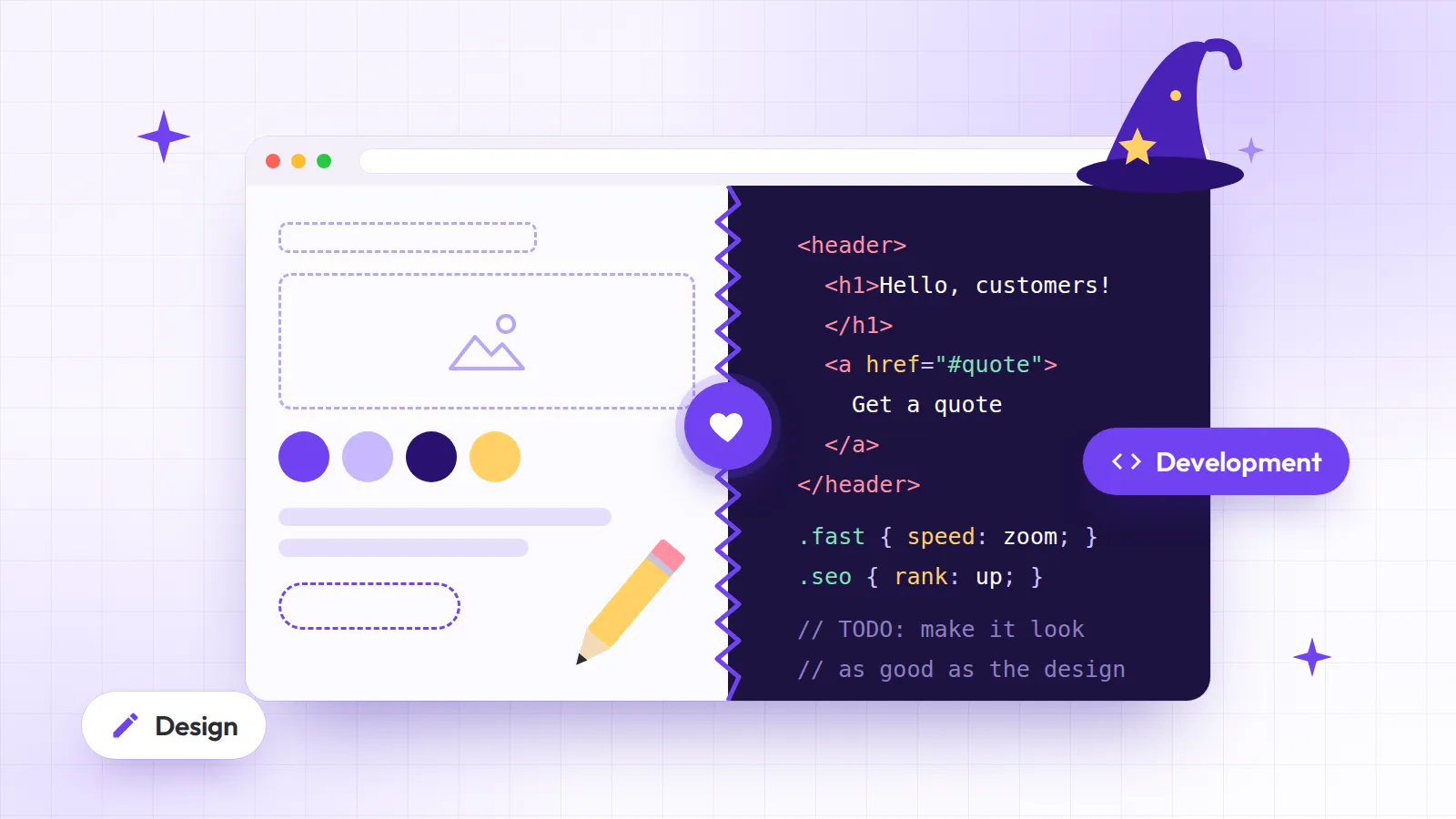
Website design and development is the process of planning, designing and building a website that works for your business. Design decides how it looks and how it guides visitors. Development is the code that makes it fast, secure and visible on Google.
Design is the shop window. Development is the door that actually opens. You need both, and they work best when the same team handles them, so nothing gets lost in translation.
Picture your website as a shop on the busiest street in town. Design is the window display and the friendly sign saying “Come in!”. Development is the foundations, the wiring and that all-important working door.
A gorgeous shop with a door that’s glued shut doesn’t sell much. Neither does a perfectly engineered warehouse painted beige with no sign. Good web design and development is both halves pulling in one direction: turning visitors into customers.
Web design vs web development: who does what?
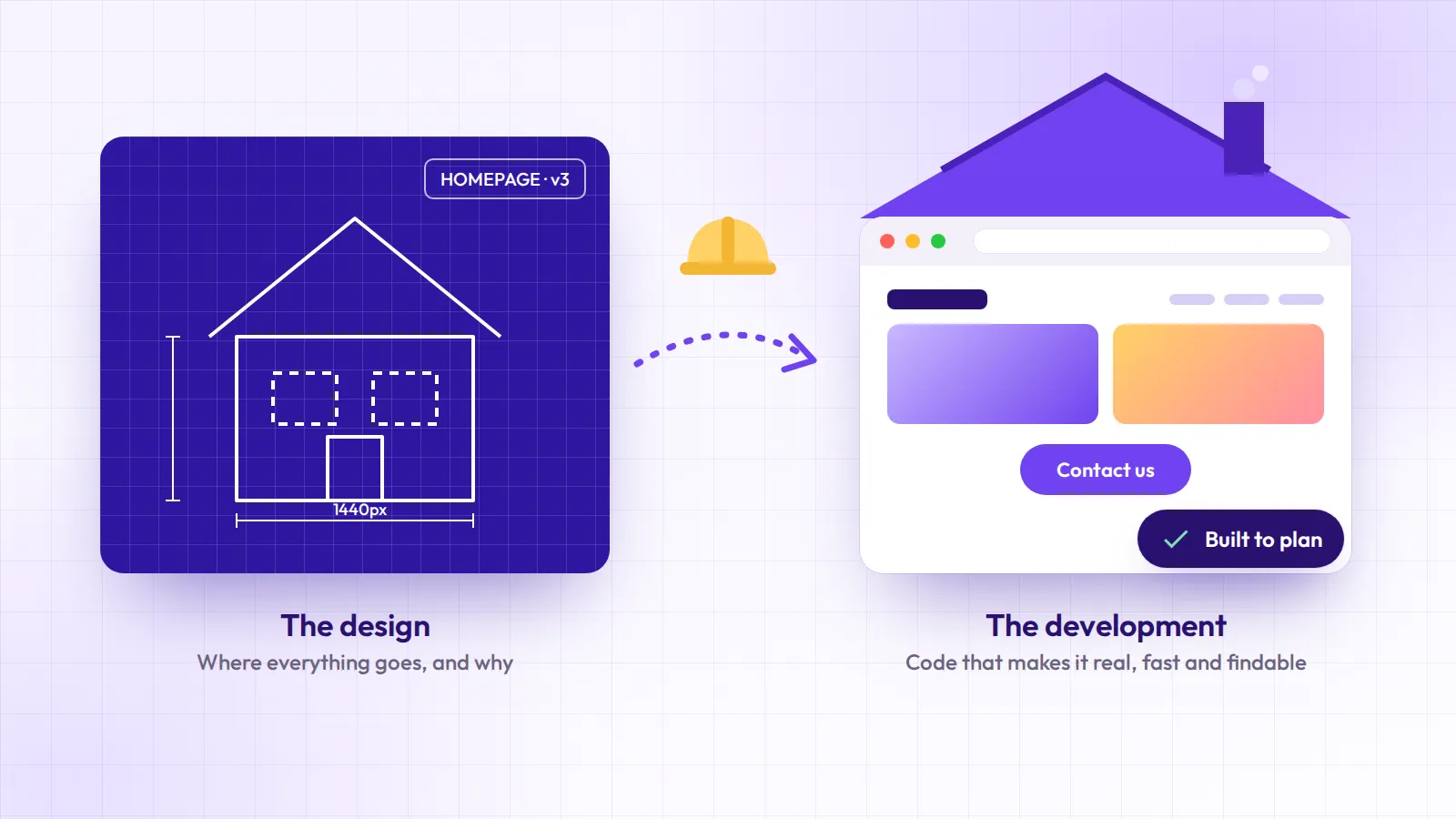
If a website were a house, the designer is the architect and the developer is the builder. The architect decides where the front door goes and why. The builder makes sure it opens, the roof doesn’t leak and the lights come on.
What does a website designer do?
Works out who your customers are and what they need to see, in what order. Then designs every page around it. Think architect, but with stronger opinions about fonts.
What does a web developer do?
Turns the design into real, working code. Makes it fast, makes it behave on every screen and makes it speak fluent Google. Think builder, but with fewer tea breaks (allegedly).
Here’s the bit agencies don’t always mention. When design and development are split between people who never talk, things go wobbly.
The designer draws a beautiful animation the developer can’t build. The developer “simplifies” the layout until it looks like a tax return. That’s why we handle web design and development together, with one person seeing it through from first sketch to launch.
The website design and development process, step by step
Every studio has its own spin on this, but a good process always covers the same ground. Here’s ours, including the bits where things usually go wrong.
Discovery: the nosy questions
Who are your customers? What do they search for? Why should they pick you over the business down the road? It’s like a first date, but with more questions about your pricing.
Planning: sitemap and structure
We decide which pages you need, what goes on each and how they link together. This is where SEO starts: a page for each main service and area gives Google something specific to rank.
Design: making it look the part
Layouts, colours, type and images, designed mobile-first around your brand. You see the design before a line of code is written, and you can ask for changes until it feels right.
Development: making it actually work
The design becomes real code: forms that send, pages that load quickly and a structure search engines understand. This is SEO website development, done properly rather than sprinkled on afterwards.
Testing: poking it with a stick
We check every page on phones, tablets and desktops, plus every form, link and speed test. We break things on purpose now, so your customers never find them by accident.
Launch, then keep growing
The site goes live and Google is told it exists. Then the real work begins: updates, new pages and ongoing SEO. Websites are a bit like houseplants. Ignore them and they wilt.
For most small businesses this takes around 2–6 weeks, start to finish. The biggest variable is usually how quickly content and feedback come back (no pressure).
What makes a good website? Your design requirements checklist
Awards are lovely, but a business website is judged on one thing: does it bring in enquiries? These are the website design requirements we tick off before any site goes live.
Mobile-first, properly responsive
Designed for the phone in your customer’s hand first. Not a desktop site squashed until it cries.
Fast. Really fast.
Compressed images, lean code and good hosting. Slow sites leak visitors to the back button.
One obvious next step
Every page makes it easy to call, message or ask for a quote. Nobody should have to hunt for your number.
SEO built in from day one
Clear page titles, proper headings and a page for each service and area. Bolting SEO on later costs more.
Trust at a glance
Real reviews, real photos, examples of your work and a secure padlock. People buy from businesses that look legit.
Accessible to everyone
Readable contrast, sensible headings and buttons that work with a keyboard. Good for people and for Google.
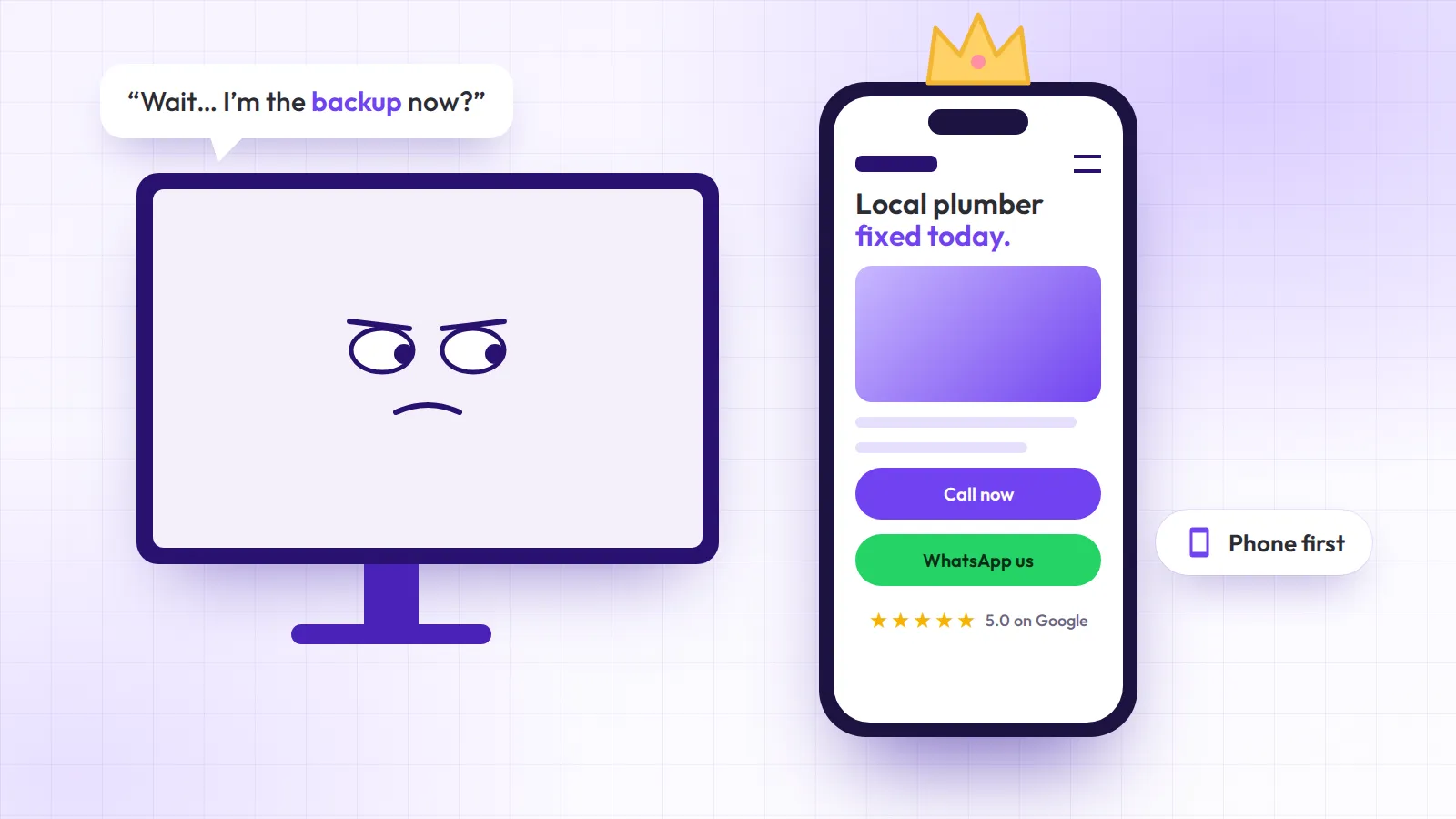
Mobile deserves a special mention. Most people looking for a local business are on their phone, often on the move.
Google agrees. It uses the mobile version of your site to decide where you rank, which it calls mobile-first indexing. If your site is fiddly on a phone, you’re losing customers you’ll never even hear about.
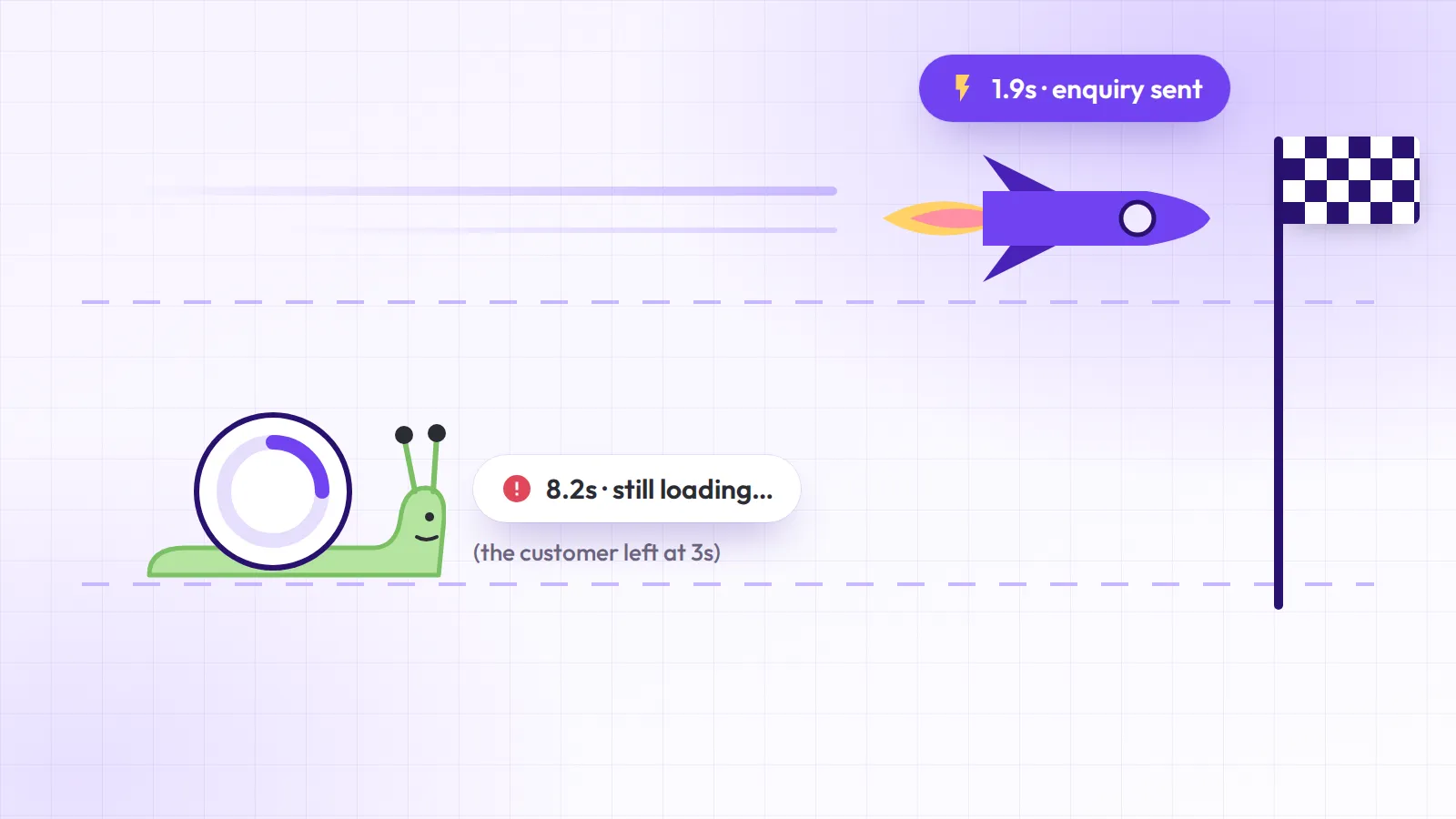
Speed is the other silent killer. Every extra second gives a visitor time to change their mind, and the back button is always right there.
Google measures this with its Core Web Vitals, a set of scores for loading speed, responsiveness and how much the page jumps about. We build with lean, hand-written code and optimised images to keep those scores green. For more on the essentials, read our 5 must-have features for every UK business website.
Custom website development vs templates
Templates are the flat-pack furniture of the internet. Cheap, quick, and fine until you notice everyone on your street has the same wardrobe. Here’s the honest trade-off:
- Templates are quick and cheap to start. But they’re built for everyone, so they fit no one perfectly, and they often carry heavy code for features you’ll never use.
- Custom website development means a site designed around your customers and how they buy. The code is lean, it loads quickly and it’s easier to rank. You own it, and it grows with you.
The good news? Custom doesn’t have to mean eye-watering. Website design for small business owners is exactly what we do, with bespoke sites at template-friendly prices.
How to redesign a website without losing SEO
Redesigns are exciting. Redesigns that wipe out years of Google rankings overnight are less exciting. If your site already brings in visitors from search, protect that first:
- List what already ranks. Check Google Search Console for the pages and searches that bring in visitors, before anything gets deleted.
- Keep winning URLs. If a page ranks, keep its address. If it must change, add a 301 redirect from the old URL to the new one.
- Carry over what works. Bring across content, page titles and descriptions that perform well. Then improve them.
- Tell Google. After launch, submit your new sitemap in Search Console and watch for errors for a few weeks.
Google’s own guide to moving a site with URL changescovers the technical detail if you fancy some light bedtime reading.
We practise what we preach. When we rebuilt this very website, we brought our best-performing articles back to exactly the addresses Google already knew.
How much does website design and development cost in the UK?
The honest answer is “it depends”, which is annoying. So here are some real numbers.
DIY website builders cost a few pounds a month plus a lot of your evenings. Freelancers typically charge £500–£2,000. Agencies tend to start around £2,000 and climb well past £10,000.
At Design Wiz, bespoke websites start from £159 for one page, £299 for three and £599 for five, plus hosting at £15/month. Or choose the Design & SEO Membership at £199/month, with your website, ongoing SEO, unlimited updates and hosting all included.
Our UK website cost guide breaks down exactly where the money goes, including the sneaky ongoing costs.
Real projects, real owners
Enough theory. Here’s what website design and development looks like from the other side of the table, in the words of two business owners we built sites for.
“From the very beginning, Design Wiz has been clear and concise, ensuring that we were well-connected throughout the whole design and building process. When issues occurred, they were quick and supportive to resolve these matters, and helped establish our website and expand our business.”
“Design Wiz really helped me transform my website ideas into real life and made an unreal design for the site. The website really helped me kick start my new business, as it gave me the confidence to show such a slick new website. I would highly recommend anyone to work with Design Wiz.”
Notice what they mention: clear communication, quick fixes and confidence. Not a single word about JavaScript frameworks. That’s the point. You can see both sites, and more, in our web design portfolio.
Red flags when choosing a web design and development company
Most web designers are lovely people. A few are not. Be wary if:
- They can’t show you a single website they’ve built. (“It’s all under NDA.” All of it?)
- They own your domain, hosting and content, and go quiet when you ask for the keys.
- They promise “Page 1 of Google in 7 days, guaranteed”. Nobody can guarantee that. Run.
- You never speak to the person actually designing or building your site.
- The quote is one big number with no breakdown of what’s included.
- They mention SEO once, in the proposal, and never again.
The fix is simple. Ask to see their work, ask who owns what and ask who you’ll actually be talking to. A good studio answers all three without breaking a sweat.
The bottom line on website design and development
Great website design and development isn’t magic, even if our logo is a wizard. It’s a clear plan, a design built for your customers, solid code underneath and someone keeping an eye on it after launch.
Get those right and your website stops being an online business card. It starts bringing in work. Not sure how yours stacks up? Grab a free website audit and we’ll tell you, kindly but honestly.
